What It Really Costs in Cash to Move Into a Boston Apartment
The cash you need at signing for a Boston apartment, built from the statutes: the four payments a landlord may require under M.G.L. c.186 §15B, the broker-fee rule in force since 1 August 2025, Eversource and BWSC rates, and the September 1 cycle.
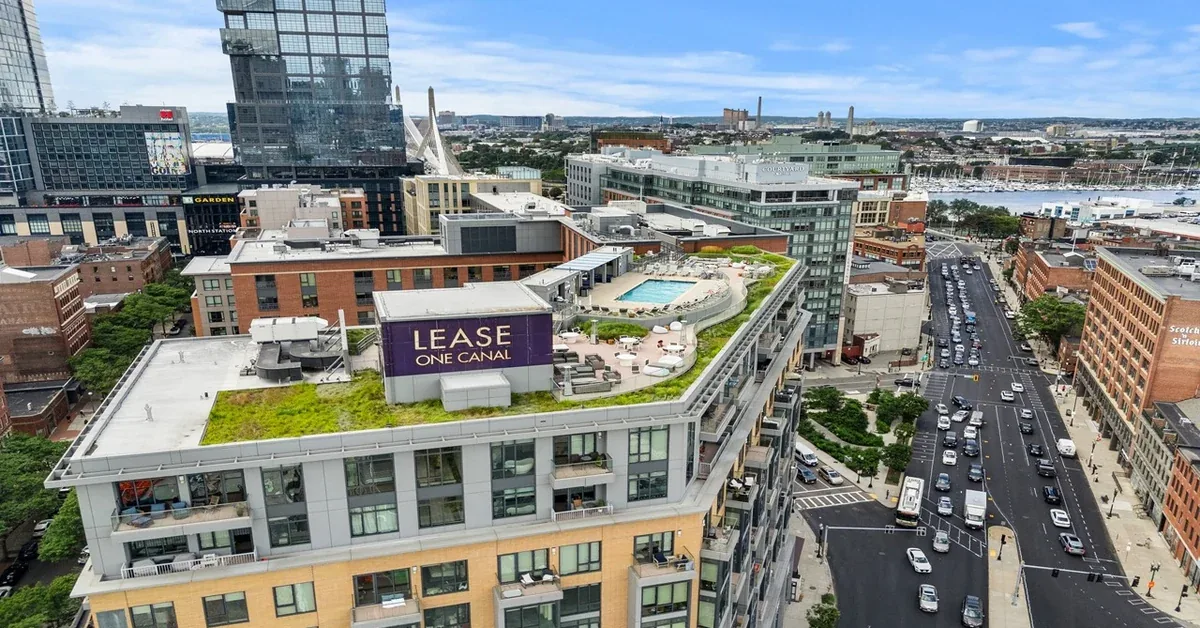
Three times the monthly rent, plus the actual cost of a new lock and key. That is the legal ceiling on what a Boston landlord or its agent may require you to pay at or before the start of a tenancy, and since 1 August 2025 a broker fee is no longer a fourth item you can be forced to add. Here is the statute, the arithmetic and the running costs, each with its read date.
The four payments a Boston landlord may require
Massachusetts caps move-in cash by statute, and the list is closed. M.G.L. c.186 § 15B(1)(b), in the text effective 1 August 2025, provides that "at or prior to the commencement of any tenancy, no lessor or agent of the lessor may require a tenant or prospective tenant to pay, to the lessor or to an agent of the lessor, any amount in excess of" four things: "(i) rent for the first full month of occupancy," "(ii) rent for the last full month of occupancy calculated at the same rate as the first month," "(iii) a security deposit equal to the first month's rent" if deposited as subsection (3) requires and the statement of condition under subsection (2) is given, and "(iv) the purchase and installation cost for a key and lock."
The words "or agent of the lessor" are doing a great deal of work. They were added by the 2025 amendment, and they mean the ceiling cannot be routed around by having somebody else collect the money. Where a fee is substituted for a deposit, § 15B(1)(d) provides that fees and deposit combined "shall not exceed, in total, the amount of 1 month's rent."
What the deposit rules actually require
A deposit triggers paperwork on a clock. Under § 15B(2)(b) you must be given a receipt signed by the person receiving the money when you pay it, and under § 15B(3)(a) a further receipt "within thirty days after such deposit is received by the lessor," indicating "the name and location of the bank" holding it, the amount and the account number.
The money must leave the landlord's own finances. Section 15B(3)(a) requires the deposit to be held "in a separate, interest-bearing account in a bank, located within the commonwealth," beyond the reach of the lessor's creditors and transferable to a later owner.
Interest is owed on both pots. Where the lessor holds a deposit for a year or longer, § 15B(3)(b) requires "interest at the rate of five per cent per year," or the lower amount actually earned, paid annually or within thirty days if the tenancy ends sooner. Last month's rent collected in advance carries the same 5 percent from the first day of the tenancy under § 15B(2)(a).
The penalty for getting it wrong is severe. Where a lessor fails to put the funds in the required account, to transfer the deposit to a successor owner, or to return it within thirty days after the tenancy ends, § 15B(7) provides that the tenant "shall be awarded damages in an amount equal to three times the amount of such security deposit," plus 5 percent interest, court costs and reasonable attorney's fees. Under § 15B(6)(b) and (c) the lessor also forfeits the right to retain any part of the deposit if no itemised damage list arrives within thirty days, or if the lease contains a conflicting provision.
The broker fee: what the law is now
Boston was long the market where the tenant routinely paid a full month to a broker the landlord had hired. That is no longer lawful. M.G.L. c.112 § 87DDD½, as amended by chapter 9 of the Acts of 2025, § 43, took effect on 1 August 2025. A licensed broker or salesperson may contract with a prospective tenant to find a property, present an offer and negotiate, or may contract with a landlord or agent to find a tenant, but not both. Only the party who originally engaged the broker and entered into the contract pays the fee.
The city states the rule in plainer words. Boston's Office of Housing Stability, in a page last updated 12 November 2025, says that from 1 August 2025 the law "prohibits property owners from requiring renters to pay broker's fees when they have not hired a broker themselves," that "if your landlord hired the broker, they must pay the fee," that "if you hired the broker and signed a contract, you pay the fee," and that "no one can require you to pay unless you agree in writing."
The position is settled, not pending, as at 13 October 2026. The general law and the city's guidance read the same way, and the amending act is in force rather than proposed. What remains variable is behaviour: if a listing still quotes a fee, ask in writing who engaged the broker.
One Canal leases direct from the owner-operator, so there is no broker fee on a lease signed with the community. That is a statement about how this community leases, not a comparison with any other building. Our guide to renting in Boston's West End sets out what the neighbourhood's housing stock looks like.
The arithmetic on One Canal's live bands
Nineteen homes across ten floor plans were listed at One Canal on 13 October 2026. One studio at $3,232 in 411 square feet; nine one-bedrooms from $3,868 to $6,502 in 649 to 996 square feet; seven two-bedrooms from $5,103 to $9,795 in 976 to 1,309 square feet; and two three-bedrooms at $7,374 and $7,504 in 1,308 square feet.
Run the statutory maximum against those numbers. First month, last month and a deposit equal to the first month's rent is three times the monthly figure, plus the actual cost of a lock and key. On the lowest one-bedroom at $3,868 that is $11,604. On the highest one-bedroom at $6,502 it is $19,506. On the lowest two-bedroom at $5,103 it is $15,309, and on the highest at $9,795 it is $29,385. The studio at $3,232 comes to $9,696.
Now see what the broker-fee change removed. Under the old Boston pattern of first, last, deposit and a full month to a broker the landlord had hired, that lowest one-bedroom would have needed $15,472 rather than $11,604, a difference of $3,868 before you own a chair. Across the two-bedroom band the saving runs from $5,103 to $9,795. Compare our guide to two-bedroom apartments in Boston, and the current availability at One Canal.
Electricity: Eversource delivery, then supply
Delivery is published to five decimal places, so you can check your bill. For Greater Boston standard residential service, rate R-1 non-heating, effective 1 September to 31 December 2026, Eversource charges $10.00 a month plus, per kWh, distribution of $0.09837, transmission of $0.04673, revenue decoupling of $0.00539, energy efficiency of $0.02292, distributed solar of $0.00583, renewable energy of $0.00050, a net metering recovery surcharge of $0.00625, a system planning factor of $0.00008, an electric vehicle programme factor of $0.00104, a modernization plan charge of $0.00001 and a transition credit of minus $0.00077. Those components add to $0.18635.
Supply is a separate charge, and Massachusetts is an expensive state for it. The U.S. Energy Information Administration put the Massachusetts residential all-in average at 30.49 cents per kWh in July 2026, against a United States average of 18.31 cents, in Electric Power Monthly Table 5.6.A released 24 September 2026. At 30.49 cents, 400 kWh costs $121.96 a month and 700 kWh costs $213.43. We publish no assumed usage figure, because no primary source reports verified consumption for apartments of these sizes.
Water and sewer in Boston
The Boston Water and Sewer Commission publishes block rates, and the first block covers most apartment use. For rates implemented 1 January 2026 and effective through 31 December 2026, the first 19 cubic feet per day is billed at $70.19 per 1,000 cubic feet for water and $66.68 for sewer, which the Commission also expresses as $9.384 and $8.914 per 1,000 gallons. The next 20 cubic feet per day costs $74.96 and $77.87.
Combined, that is $18.298 per 1,000 gallons in the first block. At 2,000 gallons a month the charge is $36.60; at 3,000 gallons it is $54.89. A stormwater charge of $9.06 per equivalent residential unit applies, and the Commission's residential schedule lists no fixed meter charge. Whether any of this reaches you directly depends on how the building is metered.
The September 1 cycle
Boston's lease calendar is unusually concentrated, and it moves price and availability. The city states plainly on its moving page, last updated 26 March 2026, that "most leases turn over in Boston at the beginning of September."
The city's own operational numbers show the scale. In an announcement last updated 28 August 2026, the Boston Transportation Department reported issuing over 3,000 moving truck permits in August, including over 2,500 for 29 August to 1 September 2026 alone. Inspectional Services suspended non-emergency after-hours permits from 28 August through 1 September 2026, resuming on 2 September.
What that means for your budget is timing, not just logistics. Searching inside the peak means competing with thousands of simultaneous moves; searching outside it usually means a shorter list and a longer lead time. If you need a truck, the city asks for online moving-day permit applications at least fifteen days ahead and in-person ones at least three days ahead, and reminds movers that trucks cannot use Storrow Drive, where the height limit is 10 feet. See also our guide to apartments near North Station.
Parking, insurance and other running costs
A City of Boston resident parking permit costs nothing. The Parking Clerk states that "there is no charge for Resident Parking permits," that the vehicle must be registered to a local address, and that permits "do not have expiration dates attached to them," with eligibility confirmed through neighbourhood-wide audits. Off-street garage pricing in the West End is set privately, and we publish no figure because none is available from a primary source.
On renters insurance, the statute sets the boundary rather than the price. Because § 15B(1)(b) closes the list of what a lessor or its agent may require you to pay at or before the commencement of a tenancy, a premium cannot be collected from you up front as a condition of signing. We publish no average Massachusetts premium, because no primary source we could read reports one.
No rent control, and no renter version of the residential exemption
Massachusetts prohibits municipal rent control by statute. M.G.L. c.40P § 4 provides that "no city or town may enact, maintain or enforce rent control of any kind," subject to a narrow exception for a municipality that accepts the chapter: compliance must become "entirely voluntary and uncoerced" six months after adoption, the regulation cannot reach occupancy, services, evictions or condominium conversion and cannot apply to owners with fewer than ten rental units or units with a fair market rent above $400, and the municipality must compensate owners from general revenue. Section 2 states the purpose as "a uniform statewide policy that broadly prohibits any regulatory scheme" of this kind, to be "liberally construed."
Boston's residential exemption is an owner benefit, and renters do not receive it. The City of Boston's Assessing Department runs it for fiscal year 2027, from 1 July 2026 to 30 June 2027, for owners occupying the property as a principal residence, with an application deadline of 1 April 2027; it reports saving qualified homeowners up to $4,353.74 in the prior year. There is no renter equivalent and no cap on what a Boston rent may be set at, which is why the § 15B move-in rules matter: they are the main statutory protection on the cash side of a Boston tenancy.
A note on scope. This is general information, not legal advice. The broker-fee and deposit provisions described here are the text in force on 13 October 2026, and the Eversource and BWSC rates carry fixed expiry dates. Confirm current rules for your circumstances with the agency or a Massachusetts attorney. For how this community's terms read against the law, see our summary of what One Canal publishes about its apartments and terms, or go straight to the community's current listings.
One Canal is an AIR Communities property, and this guide is published by the community. Pricing, availability and fees were checked against the community's own published listings on 13 October 2026 and change frequently. All external figures were read on 13 October 2026 from M.G.L. c.186 § 15B, c.112 § 87DDD½ and c.40P §§ 2 and 4 on malegislature.gov, the City of Boston's broker fee, moving, parking and assessing pages, Eversource's Greater Boston electric delivery rates, EIA Electric Power Monthly Table 5.6.A, and the Boston Water and Sewer Commission's 2026 residential rates. Confirm current terms with the leasing office before making a decision.
Frequently asked questions
How much cash do I need to move into a Boston apartment?
Under M.G.L. c.186 § 15B(1)(b) a lessor or its agent may require no more than first month's rent, last month's rent, a deposit equal to the first month's rent, and the cost of a new lock and key. That is three times the monthly rent plus the lock, so on a $5,103 two-bedroom it is $15,309.
Can a Boston landlord still charge me a broker fee?
Only if you engaged the broker yourself. Since 1 August 2025, M.G.L. c.112 § 87DDD½ provides that only the party who originally contracted with the broker pays the fee, and the City of Boston states that "no one can require you to pay unless you agree in writing."
Is the Massachusetts broker fee law settled or still changing?
It is settled as at 13 October 2026. The amendment was made by chapter 9 of the Acts of 2025 and took effect on 1 August 2025, and both the statute and the city's guidance state the same rule.
Does One Canal charge a broker fee?
No. One Canal leases direct from the owner-operator, so there is no broker fee on a lease signed with the community.
What is the maximum security deposit in Massachusetts?
A deposit equal to the first month's rent, under § 15B(1)(b)(iii). Where a fee is substituted for a deposit, § 15B(1)(d) caps fees and deposit together at one month's rent.
Do I get interest on my deposit and last month's rent?
Yes. Section 15B(3)(b) requires 5 percent a year, or the lower amount actually earned, once a deposit has been held a year or longer, and § 15B(2)(a) applies the same 5 percent to last month's rent from the first day of the tenancy.
What happens if a landlord mishandles my deposit?
Section 15B(7) awards "damages in an amount equal to three times the amount of such security deposit," plus 5 percent interest, court costs and attorney's fees, where the lessor fails to use the required account, to transfer the deposit to a successor owner, or to return it within thirty days after the tenancy ends.
Why do so many Boston leases start on 1 September?
The City of Boston states that "most leases turn over in Boston at the beginning of September." In 2026 the Transportation Department issued over 2,500 moving truck permits for 29 August to 1 September alone.
How much is electricity in a Boston apartment?
Eversource's Greater Boston residential delivery charges from 1 September to 31 December 2026 are $10.00 a month plus $0.18635 per kWh, with supply billed separately. The EIA put the Massachusetts residential all-in average at 30.49 cents per kWh in July 2026.
Is there rent control in Boston?
No. M.G.L. c.40P § 4 provides that "no city or town may enact, maintain or enforce rent control of any kind," subject to a narrow voluntary exception requiring the municipality to compensate owners from general revenue.